Hill Country Land Buying Checklist
Check the paper, ground, access, and infrastructure before a beautiful lot becomes an expensive surprise.
Written by Vanessa Harris · Last updated August 15, 2026
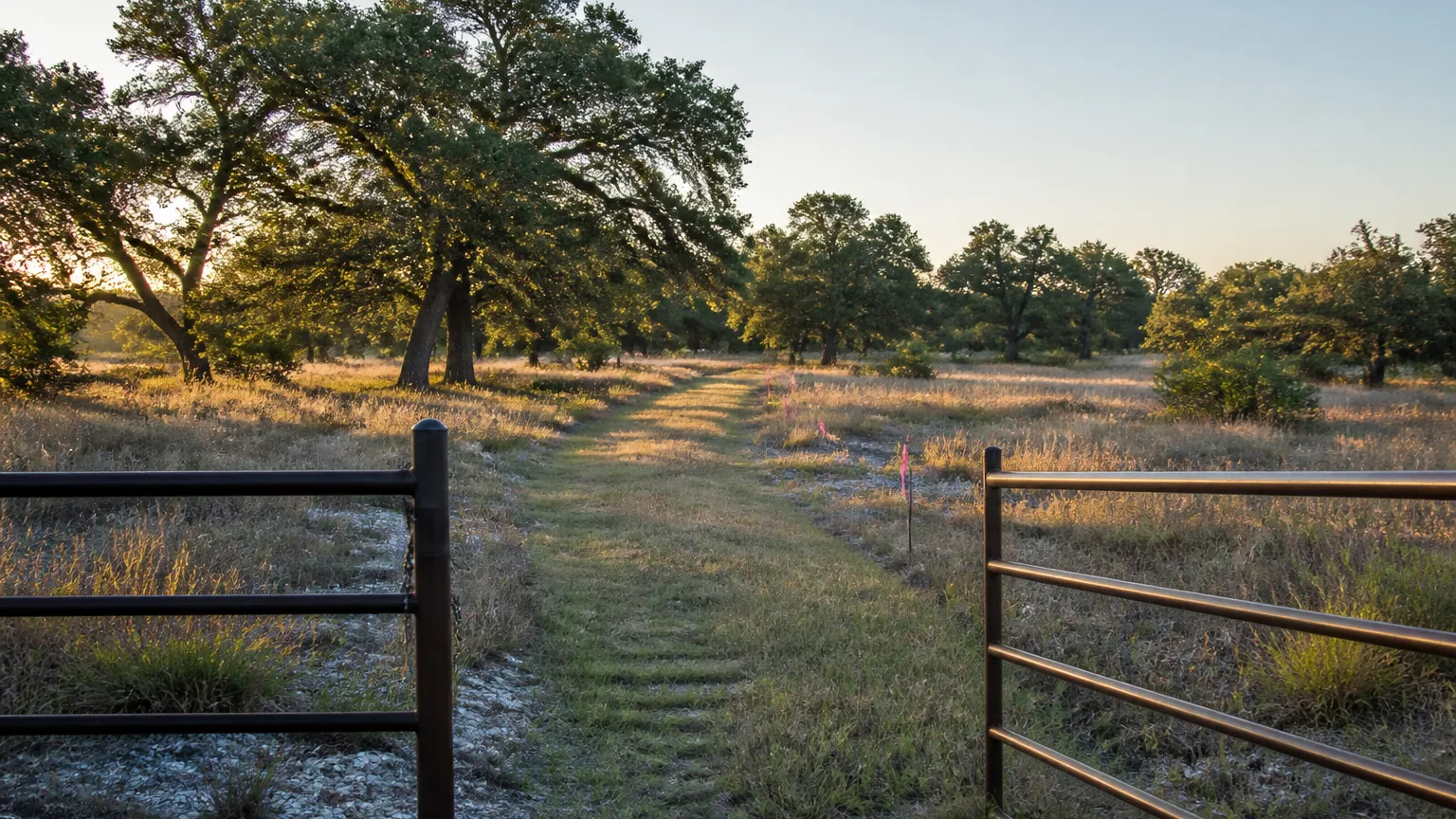
What Should You Check Before Buying Land?
Before buying a Hill Country lot, verify jurisdiction, legal access, easements, floodplain exposure, aquifer rules, slope, limestone, water, septic, and utilities. Current market data places a survey at $1.5K-$4K and a geotechnical report at $800-$1,500. Riverbend Hill Country Homes can review the property first, then identify which checks are needed to test its build cost.
Buy After Diligence, Not Before
A wide view and a good address do not prove that a lot supports your home or budget. Treat the purchase as the first construction decision. Set an offer period that leaves room to review title documents, reach the site, study the ground, and test water and wastewater assumptions. The goal is not to remove every uncertainty. It is to understand the expensive ones before the land controls the rest of the project.
Begin with the home you intend to build, not with a generic idea of buildability. Bedroom count, living level, garage, outdoor rooms, pool, guest space, privacy, views, and accessibility all change the needed building envelope. A property may hold a smaller or differently shaped home while rejecting the plan you want. The review should connect those requirements to setbacks, easements, slope, drainage, trees, utilities, and the practical path for construction.
Keep land price and project price in the same worksheet. Raw Hill Country site development often runs $50K-$150K+ before the foundation, while a buildable Dripping Springs area lot may range from $150K-$600K+ in current market data. A lower purchase price can be sensible, but only after access, rock, water, wastewater, and approvals are accounted for. Buying first and budgeting later gives the most difficult site conditions control over the home.
Know Which Rules Apply
Start with a jurisdiction ladder. A lot inside city limits may face city zoning, building permits, inspections, utility requirements, and a separate community review. A lot in an extraterritorial jurisdiction may have some city-related development rules while relying on county or other authorities for different approvals. County-only land follows another path. The mailing address, listing town, or school district does not reliably tell you which layer controls the proposed work.
Some market names cross political boundaries. Spicewood-style properties can sit in different counties even when listings use the same place name, and a large tract can raise two-county questions. Confirm the parcel and proposed building area on the relevant maps, then identify who reviews access, septic, floodplain, drainage, utilities, and construction. Hays County permit planning may run $5K-$15K in current market data, but the actual path depends on the property's governing authorities.
Check jurisdiction before an offer because it can change both feasibility and timing. A city or community may regulate setbacks, height, exterior materials, tree protection, driveway connections, or design review. County-only does not mean rule-free because recorded restrictions, floodplain requirements, septic approval, utilities, and road access still matter. A useful feasibility review produces a written approval map: which body decides what, which documents are required, and which answers must arrive before design.
Read The Paper Before Walking The Ground
Confirm whether the property sits in a city, an extraterritorial jurisdiction, or county-only territory, because the approval path can change. Some areas, including Spicewood, cross county lines, so the mailing name alone is not enough. Review easements, recorded access, and restrictions. Check FEMA floodplain exposure near rivers and creeks, and determine whether aquifer recharge-zone rules apply in parts of Hays County before treating a building area as usable.
Read the survey, title material, plat, restrictions, easements, and available utility documents together. An easement may preserve access, drainage, or utility rights through the area that looks ideal for the home. Setbacks can narrow that area further. A shared road may exist physically without giving the construction traffic or permanent access rights the project needs. Paper review should identify conflicts for field verification rather than assuming what appears open is legally available.
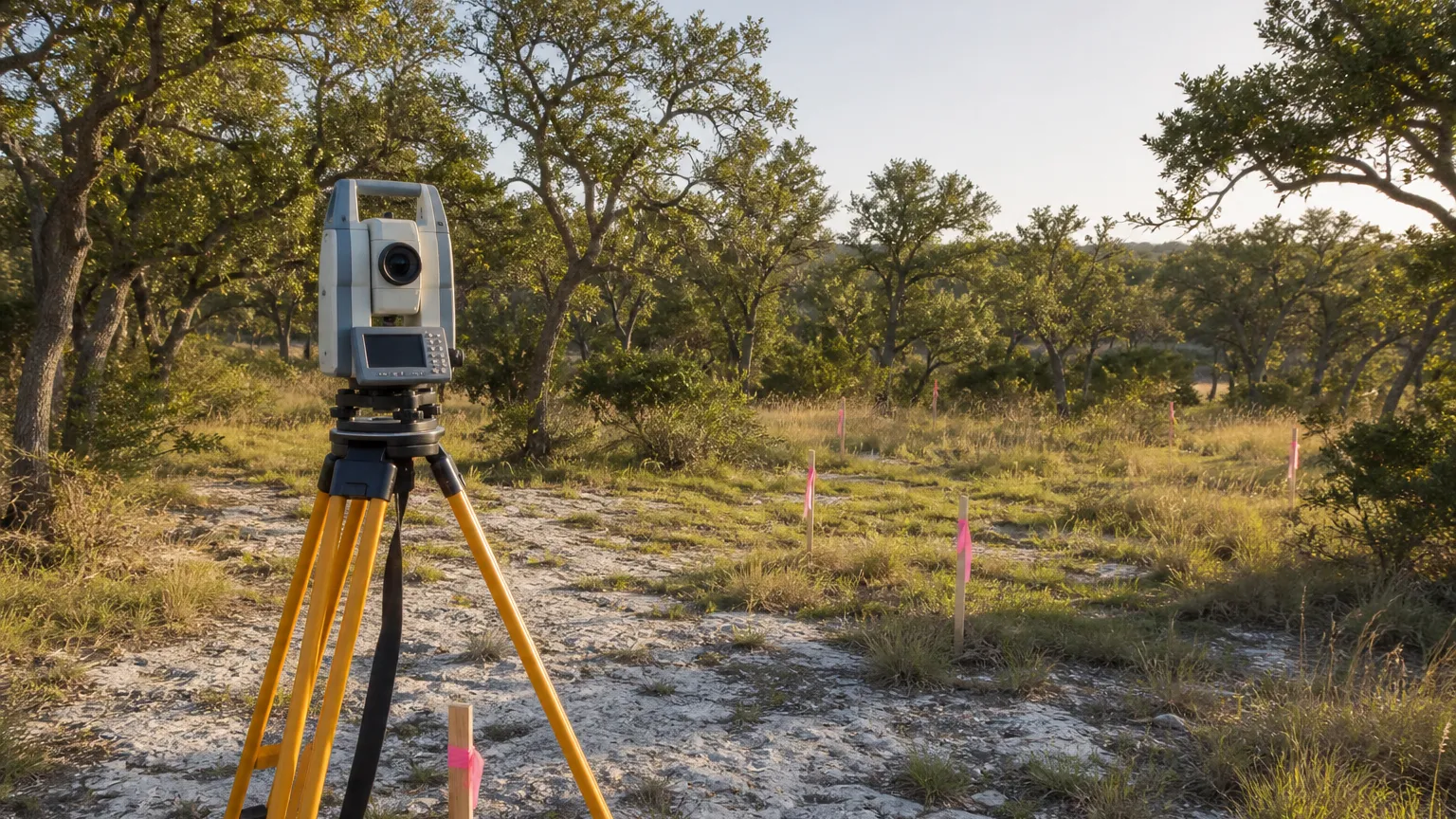
Then walk the property with the documents in hand. Locate corners where practical, follow the access route, observe drainage paths, note visible limestone and large trees, and compare the apparent building area with recorded constraints. A survey typically costs $1.5K-$4K in current Hill Country market data. Its value is not merely acreage confirmation. It gives the design and diligence team a common base for placing the home, driveway, utilities, septic, and drainage work.
Found a lot you like? Have Vanessa walk it before you sign anything. The feasibility call covers exactly this checklist.
Schedule a ConsultationPay For The Ground Checks
A survey defines the property, easements, and visible improvements. A geotechnical report tests soil and rock conditions that can change the foundation approach. Water and wastewater feasibility matter outside utility service, while a raw site also needs an access and development plan. Current Hill Country market data places these individual checks and improvements across wide ranges, which is why a low land price should never stand in for a complete site budget.
Sequence the checks around the property's largest unknowns. If access is legally uncertain, resolve that before testing a building pad you may not reach. If floodplain covers much of the tract, define the usable envelope before selecting boring locations. If wastewater is the constraint, evaluate suitable septic area before fixing the house and pool. The builder, surveyor, geotechnical professional, engineer, and system specialists should work from the same intended site concept rather than producing disconnected reports.
| Item | Typical 2026 cost | What it tells you |
|---|---|---|
| Survey | $1.5K-$4K | Boundaries, easements, access, and visible site features |
| Geotechnical report | $800-$1,500 | Soil, shallow rock, and likely foundation considerations |
| Well | $10K-$25K | The planning range when public water is not available |
| Conventional septic | $9K-$15K | The planning range where site conditions support a conventional system |
| Aerobic septic | $14K-$30K+ | The planning range when an aerobic system is required |
| Raw-land site development | $50K-$150K+ before the foundation | The potential scale of access, clearing, utilities, drainage, and site preparation |
Understand Water Before You Buy
Where public water does not reach the property, a well is more than a drilling line item. Current Hill Country planning ranges place a well around $10K-$25K, but feasibility also depends on location, access for equipment, expected yield, water quality, storage or treatment needs, and separation from wastewater components. A nearby well can offer context, yet it does not guarantee that the proposed well on your parcel will perform the same way.
Septic suitability starts with the land, not a preferred system. Current market data places conventional septic around $9K-$15K and aerobic systems around $14K-$30K+. A soil and site evaluation helps determine which approach fits, where it can sit, and what area must remain available. The home, driveway, pool, well, easements, slope, and landscaping all compete for space, so wastewater planning belongs in the site concept before architecture claims the usable ground.
Water review also includes what crosses the property. Near rivers and creeks, check mapped floodplain and visible drainage before assuming a flat area is buildable. Where aquifer recharge-zone rules apply, identify the relevant review early because site disturbance, wastewater, and drainage decisions may require added coordination. The goal is not to avoid every water feature. It is to place the home and infrastructure with a clear understanding of runoff, groundwater, approval, and risk.
Plan Access And Utilities Together
Legal access and physical access answer different questions. Recorded rights may allow entry, while the existing road may still be too narrow, steep, soft, or sharply curved for construction equipment and regular deliveries. Verify access on paper, then test the route in the field. Confirm who maintains a shared drive, whether gates or low branches restrict large vehicles, and where crews can turn, stage, and protect neighboring property during the build.
Rural driveways are often 200-600 feet. Current Hill Country ranges place gravel around $8-$15 per foot and concrete around $18-$35 per foot, making route and material decisions meaningful before decorative upgrades enter the budget. A straighter drive may cost more in clearing or rock work, while a longer contour route may reduce grade. The site plan should balance daily use, emergency access, drainage, utilities, construction traffic, and the arrival experience.
Confirm power availability, the service point, and the likely route before assuming the line at the road solves the problem. Distance, rock trenching, easements, and coordination with utility crews can affect cost and timing. Plan power, water, wastewater, communications, and driveway routes as one system because they can compete for the same corridor. A short utility path is not useful if it crosses the septic field, drainage route, protected area, or another party's land.
| Item | Planning range or check | What to verify |
|---|---|---|
| Driveway length | Rural sites often 200-600 ft | Grade, turns, drainage, construction access, and emergency use |
| Gravel driveway | $8-$15/ft | Base preparation, rock work, drainage, maintenance, and included limits |
| Concrete driveway | $18-$35/ft | Subgrade, reinforcement approach, drainage, finish, and included limits |
| Power reach | Confirm with the serving utility | Service point, route, trenching conditions, easements, and crew timing |
| Legal access | Verify in recorded documents | Permanent rights, shared-road duties, gates, and construction traffic |
| Utility corridor | Coordinate before site design | Conflicts with septic, well, drainage, driveway, trees, and easements |
Compare Diligence With The Risk
A survey and geotechnical report are small planning costs beside the condition they may reveal. On shallow limestone, the foundation swing between drilled piers and a conventional slab can be $30K-$75K+ in current Hill Country market ranges. Wells, septic, access, clearing, and drainage can move separately. Diligence does not make those costs disappear, but it lets you compare the land price with the work required to make the property buildable.
Do not judge each risk in isolation. A steep lot with shallow rock may need a different foundation, longer access, more drainage work, and a costlier utility route at the same time. Cedar clearing plus limestone milling can add $20K-$60K+ in current market data. The combined effect matters more than whether any single range feels manageable. Build a site subtotal that shows known scope, allowances, exclusions, and unresolved conditions before deciding what the land is worth to you.
Use a 10-15% project contingency as a planning principle, not as permission to ignore obvious unknowns. Contingency is stronger when major diligence has already converted surprises into scoped work. It should not stand in for legal access, a wastewater path, floodplain review, or a foundation concept. Ask what risk each allowance covers, who can authorize its use, and whether the purchase still makes sense if several site ranges move toward their upper ends.
Spot Deal-Killers Early
No legal access is an immediate paper problem, even when a worn road appears to reach the land. An easement through the intended building envelope can make a beautiful pad unusable. Floodplain coverage can leave too little practical area for the home and supporting infrastructure. Community restrictions may reject the roof form, materials, size, outbuildings, or construction process you intend. Each issue should be tested against the actual project rather than a generic idea of a house.
Other conditions may not kill the deal alone but can do so in combination. An aerobic septic range of $14K-$30K+, a long concrete driveway at $18-$35 per foot, shallow rock, and a difficult foundation can consume money intended for the home. The right question is not whether each condition is technically solvable. It is whether the complete solution preserves the intended design, schedule, and all-in budget after realistic site allowances are included.
A feasibility-period contingency in an offer can create time to investigate material property conditions while options remain open. Its wording, deadlines, rights, and remedies depend on the transaction, so discuss them with your real estate and legal advisers. From a building perspective, the period should be long enough to obtain the available documents, identify governing authorities, visit the site, and complete the highest-value checks before the purchase becomes difficult to reverse.
Review The Lot Before You Commit
Riverbend can begin with a Feasibility Call while you are still evaluating the property. Bring the listing, survey or title material available, intended home, budget range, and purchase timing. The first review identifies immediate concerns and the professionals or tests needed next. It also connects the lot to the complete project, so architecture does not begin with an access, foundation, water, or wastewater assumption that has never been checked.
The useful outcome is a decision plan, not an instant promise that the lot works. It should identify the likely building area, approval path, access questions, site investigations, water and wastewater route, foundation unknowns, and early budget allowances. Some answers may require outside specialists. That is normal. A disciplined review tells you which unknowns can wait for design and which ones can change the purchase decision now.
Land Buying Questions
Can Riverbend review a lot before I make an offer?
Yes. Start with a Feasibility Call and share the listing, location, available documents, intended home, budget range, and purchase timing. Riverbend can flag immediate questions and identify the survey, geotechnical, access, floodplain, water, septic, or jurisdiction checks that should happen before you treat the lot as a workable building site.
What makes a Hill Country lot fail review most often?
No single condition disqualifies every lot. The problem is often a combination of access, steep slope, shallow rock, drainage, floodplain exposure, easements, restrictions, or expensive water and septic needs that no longer fit the intended home and budget. A lot may be physically buildable but financially wrong for the project.
How much diligence money is reasonable before buying?
The right amount depends on the property and offer terms. Current Hill Country market data places a survey around $1.5K-$4K and a geotechnical report around $800-$1,500. Water, septic, engineering, or access review may require more. Spend first on the unknowns most likely to change buildability or the all-in budget.
Will the seller provide the information I need?
A seller may provide a survey, restrictions, easement documents, utility information, or earlier studies, but availability and quality vary. Treat supplied material as a starting point. Confirm that it covers the current property and proposed use, then identify what still needs independent review before relying on it for design, foundation, access, water, or wastewater decisions.
What if the lot does not pass the review?
Use the findings to decide whether to walk away, renegotiate, change the home, or budget for the required work. A failed assumption is useful when discovered before purchase. Riverbend can help separate a condition that is manageable through design from one that makes the property too expensive or impractical for your goals.
What does legal access mean for a buildable lot?
Legal access means recorded rights support entry to the property, not merely that a visible road reaches it. Review the route, easements, shared-road obligations, gates, and rights for permanent and construction use with the appropriate advisers. Then confirm that the physical route can handle equipment, deliveries, drainage, and daily access.
Can a creek lot lose too much usable building area?
Yes. Floodplain, drainage, setbacks, easements, wastewater needs, slope, and access can overlap until the remaining envelope no longer fits the intended home and supporting improvements. Map those constraints together. A large acreage number does not guarantee a large usable pad, especially near waterways or where infrastructure competes for the same ground.
Should my offer include time for feasibility checks?
A feasibility period can preserve time to review material building conditions before the purchase becomes difficult to reverse. The appropriate wording and deadlines are transaction-specific, so consult your real estate and legal advisers. Coordinate the period with the documents, site visits, specialist availability, and highest-priority tests the property is likely to require.
Know The Lot Before It Owns The Plan
Review the property while your options are still open, then buy with the site work and complete project budget in view.